uLab Systems: A Flexible, In-Office Approach to Phase I
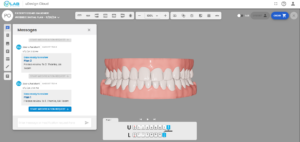
Unlike companies offering a dedicated Phase I product, uLab Systems provides orthodontists with a flexible software platform, uDesign, that empowers them to create and produce their own aligner solutions for early treatment. This approach is rooted in providing clinicians with maximum control over both the treatment plan and the production workflow. “We provide offices the ability to really do things how they want to do it,” says Jennifer Bigelow, senior manager of clinical training and product development at uLab. “We don’t really put them in a box.” This philosophy translates into a system where orthodontists can treat Phase I cases with as few or as many aligners as needed, with the option to print them in-office or order them from uLab on an a la carte or bundled basis.
The uDesign software is equipped with several features that are valuable for mixed dentition cases—for example, eruption domes, which function like larger pontics placed over primary teeth to create and preserve space for incoming permanent teeth. “The orthodontist can really go in and treatment plan that case, putting in those eruption domes to create that path of eruption and help to reduce the crowding,” explains Bigelow. The software also allows for the addition of bite ramps to open the bite for crossbite correction, as well as cutouts for buttons and elastics. Furthermore, clinicians can adjust the aligner trim line to accommodate other appliances, such as expanders.
Elsie Tafur Chang, DDS, manager of uLab’s uAssist treatment planning service and a private practitioner, emphasizes the clinical efficiency these features offer for common Phase I malocclusions. She finds that for specific indications, the digital aligner workflow allows for corrections that are often faster than with traditional appliances. “[If I have an anterior crossbite], if I have to cross a tooth, I use the bite ramps and just cross it,” she explains. “I find that very helpful.” She also points to deep bite correction and lower incisor intrusion as movements where the system is particularly effective.
The platform also addresses the dynamic nature of mixed dentition through its flexible refinement capabilities. Because early treatment often involves rapid changes—such as unexpected tooth loss or eruption—clinicians can rescan and replan a case mid-treatment directly within the existing patient record. “You need that facility, that flexibility of a software that can actually let you do that,” says Tafur Chang, noting that while features like eruption domes aim to minimize mid-course corrections, the ability to adapt is essential when “a lot of things can happen” in a growing mouth. Bigelow adds that this workflow allows offices to address tracking issues or compliance lapses immediately, with the option to print refinement aligners in-house to avoid lab delays and keep treatment timelines tight.
The uLab platform is designed to support a seamless two-phase treatment workflow. A clinician can create a Phase I case for a patient and, when the time is right, take a new scan and create a separate Phase II case under the same patient record, keeping all historical data organized and accessible. For doctors who prefer assistance with treatment planning, the uAssist service offers a solution where orthodontists can submit a prescription and have the uLab team of orthodontists and technicians prepare the digital setup for their review.
Ultimately, uLab’s strategy centers on empowering the orthodontist. The ability to print aligners in-office gives practices control over turnaround times and costs, while the software’s versatility allows them to tailor treatment to the specific needs of each young patient. Bigelow sees this flexibility as the core advantage. “We want to put that control in their hands,” she says. “This way they can actually do what they want to do.” OP
Read The full article at Orthodontic Products Online